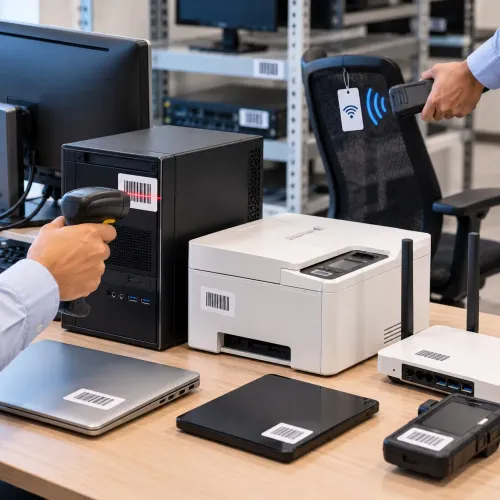

A Fixed Asset Audit compares an organisation’s accounting or operational records with the assets physically available at its locations. It helps establish whether assets listed in the register exist, whether unrecorded assets are present, and whether descriptions, locations, custodians, and conditions are accurate.
The exercise is relevant to corporate offices, factories, hospitals, educational institutions, warehouses, and service companies across Mumbai and Maharashtra. Its value depends on preparation, verification discipline, and timely resolution of discrepancies.
Establish the Scope Before Verification Begins
A clear scope prevents confusion once auditors arrive at the site. Management should determine:
- Locations and departments to be covered
- Asset categories included in the audit
- Cut-off date for purchases and disposals
- Existing register or data source to be used
- Treatment of leased and customer-owned assets
- Verification method for portable or remote assets
- Required reports and approval responsibilities
Large businesses may conduct verification in phases, beginning with high-value, portable, safety-critical, or technology assets.
Prepare the Existing Asset Data
The current fixed asset register should be reviewed before the physical count. Obvious duplicate records, blank descriptions, invalid location names, and missing asset numbers should be identified.
This stage is not intended to hide discrepancies. It makes the fieldwork more efficient by creating a usable verification base.
The register should ideally include asset number, category, description, serial number, department, location, user, acquisition details, and current status. Where records are incomplete, auditors may collect missing information during the physical exercise.
Freeze or Record Asset Movements
Assets may continue moving during an audit. Laptops may be issued, machinery may be relocated, and equipment may be sent for repair. If these movements are not controlled, the same asset could be missed or counted twice.
Companies can establish a temporary movement freeze where practical. When operations cannot stop, all movements during the audit period should be documented with asset number, previous location, new location, date, and authorised person.
Verify Each Asset Physically
The verification team compares physical assets with register entries. Depending on the scope, it may capture:
- Asset identification number
- Barcode or QR code
- Make and model
- Serial number
- Physical location
- Department or cost centre
- Employee custodian
- Operational condition
- Tag status
- Photograph, where authorised
For fixed installations and specialised machinery, the team may need assistance from facility or engineering personnel to identify components correctly.
Classify the Exceptions
Discrepancies should be separated into meaningful categories rather than placed in one general list.
Typical exceptions include:
- Asset recorded and physically verified
- Asset found at a different location
- Asset assigned to a different employee
- Physical asset without a register entry
- Register entry without a physically located asset
- Damaged or non-operational asset
- Duplicate register record
- Asset with an unreadable or missing tag
- Asset under repair or temporarily off-site
- Asset awaiting disposal
This classification helps responsible departments investigate each issue efficiently.
Reconcile and Approve Corrections
An exception does not automatically prove that an asset is missing. It may have been transferred without updating the register, sent to a vendor, placed in storage, or recorded under another description.
Finance, IT, procurement, administration, and location representatives should review the exception report. Supporting documents may include purchase invoices, goods receipt notes, transfer forms, repair challans, employee issue records, and disposal approvals.
Register corrections should be made only after authorised review.
Preserve an Audit Trail
The final report should show the original information, verified information, recommended correction, reason for the difference, and approval status. This creates traceability for management and future audits.
Welcome to V SOURCING can assist Mumbai organisations with planned physical verification, data capture, tagging review, and exception reporting. A well-executed audit does more than count assets it creates a dependable foundation for financial reporting, operational accountability, and future asset decisions.
Keywords