
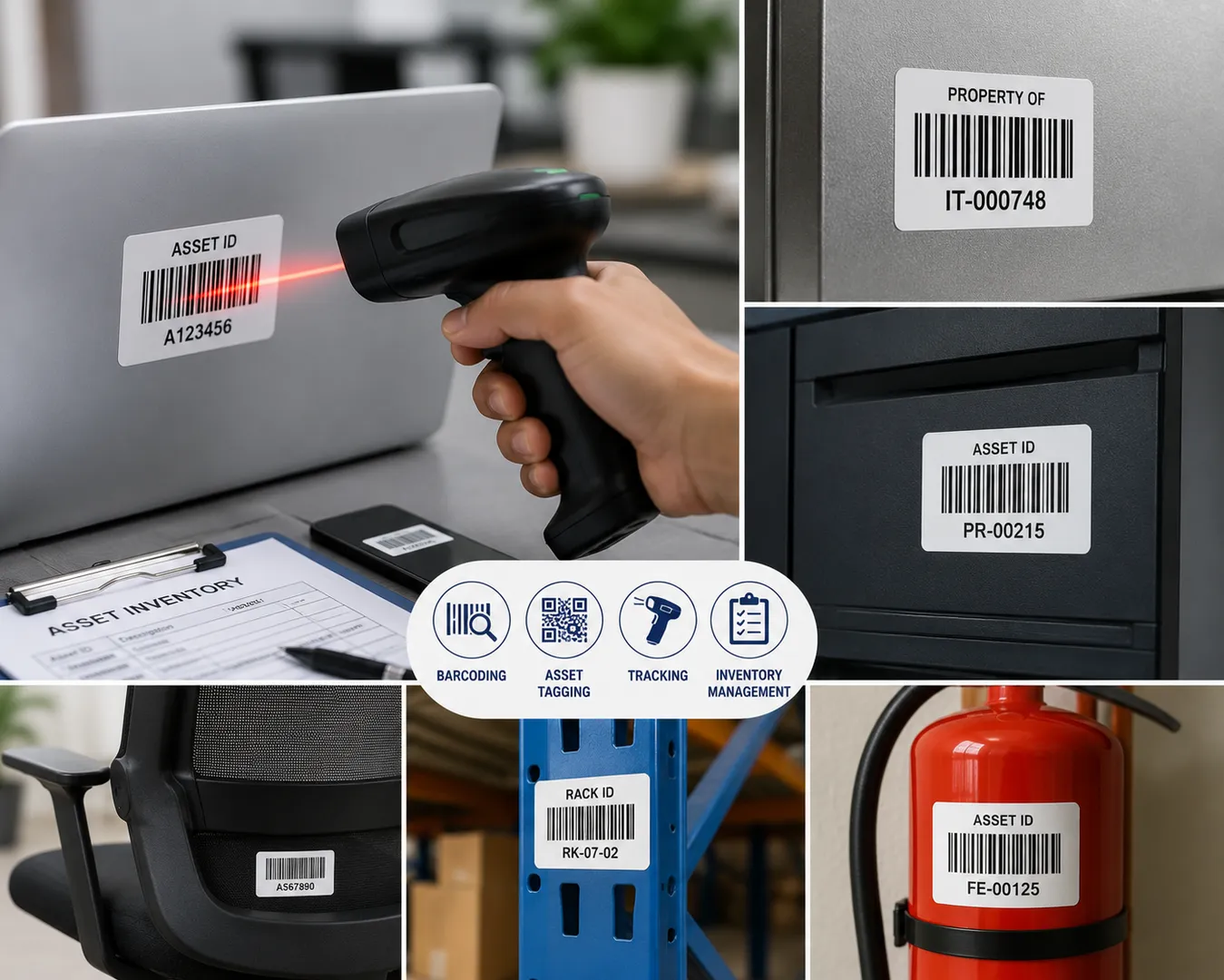
Managing hundreds or thousands of business assets without proper identification can quickly become challenging. Equipment may move between departments, offices expand, new purchases are added regularly, and older assets are retired. Without a reliable identification system, maintaining accurate records becomes difficult.
This is where Asset Tagging and Barcoding Services play an important role. By assigning every asset a unique identifier, businesses can improve visibility, reduce manual errors, and simplify future asset audits.
Organizations across Mumbai are increasingly adopting barcode-based asset identification to strengthen accountability and streamline day-to-day asset management.
What Is Asset Tagging?
Asset tagging involves attaching a durable identification label to every physical asset owned by an organization.
These labels usually contain:
- Unique asset number
- Barcode
- QR code
- Company identification
- Serial information
- Tracking reference
Each tag connects the physical asset to its digital record within the organization's asset management system.
Why Asset Identification Matters
Without standardized tagging, businesses often experience:
- Duplicate asset records
- Missing equipment
- Time-consuming manual verification
- Incorrect departmental allocation
- Difficult maintenance tracking
- Inefficient audits
A barcode-based system significantly reduces these operational challenges.
Benefits of Barcode Asset Tagging
Faster Asset Verification
Scanning a barcode is much quicker than manually recording asset details.
Improved Accuracy
Unique identifiers reduce duplication and minimize human errors.
Better Asset Accountability
Organizations can identify which department or employee is responsible for each asset.
Simplified Maintenance
Maintenance history becomes easier to record and monitor.
Easier Audits
Physical verification takes less time when assets are already tagged.
Which Assets Can Be Tagged?
Almost every fixed asset can be identified through barcoding.
Examples include:
- Computers
- Printers
- Servers
- Office furniture
- Air conditioners
- Manufacturing machinery
- Laboratory equipment
- Medical devices
- Electrical panels
- Warehouse equipment
Businesses can customize tagging methods depending on the operating environment.
Types of Asset Tags
Different workplaces require different tagging materials.
Common options include:
- Polyester barcode labels
- Metal asset tags
- Tamper-evident labels
- High-temperature resistant tags
- Chemical-resistant labels
- QR code labels
Selecting the right material helps ensure long-term durability.
Why Businesses in Mumbai Are Investing in Asset Tagging
Large organizations often manage assets across multiple buildings and departments.
Barcode-based asset identification helps:
- Standardize records
- Improve inventory accuracy
- Support internal audits
- Reduce misplaced equipment
- Strengthen compliance
- Simplify reporting
These advantages become increasingly valuable as organizations grow.
Integrating Tagging with Asset Management
Asset tagging delivers the best results when combined with a structured asset management system.
Each barcode can be linked to information such as:
- Purchase details
- Warranty information
- Maintenance schedules
- Department allocation
- Current location
- Asset condition
- Depreciation records
This creates a comprehensive digital profile for every asset.
Organizations looking for structured implementation often work with experienced providers such as Welcome to V SOURCING, where asset tagging is integrated with broader asset management practices to improve long-term operational efficiency.
An effective tagging system not only simplifies asset tracking but also creates greater transparency, accountability, and confidence in organizational asset records.
Keywords