


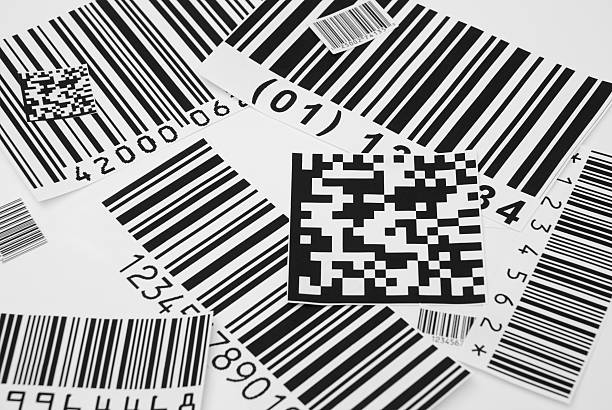
BARCODE/RFID
Barcodes and Radio-Frequency Identification (RFID) are both technologies used for tracking and managing information about objects. However, they operate in different ways and have distinct advantages and disadvantages.
Barcodes:
Working Principle:
- Barcodes use a series of parallel lines of varying widths to represent data.
- A barcode scanner reads the pattern of lines and converts it into a alphanumeric code.
Advantages:
- Cost-Effective: Barcodes are generally cheaper to implement compared to RFID.
- Widespread Usage: Barcodes are prevalent and widely accepted in various industries.
- Simple Technology: Barcodes are simple and do not require a power source.
Disadvantages:
- Line of Sight: Barcodes need a direct line of sight for scanning, which can be inconvenient in some situations.
- Limited Data Capacity: Barcodes have limited data storage capacity compared to RFID.
RFID:
Working Principle:
- RFID uses radio waves to transmit data between a reader and an RFID tag.
- Tags can be either active (with a power source) or passive (powered by the RFID reader).
Advantages:
- Non-Line-of-Sight: RFID does not require a direct line of sight for communication.
- Higher Data Capacity: RFID tags can store more data than barcodes.
- Durability: RFID tags can be more durable as they are often encased in protective materials.
Disadvantages:
- Cost: RFID technology can be more expensive to implement than barcodes.
- Complexity: RFID systems are more complex than barcode systems.
- Potential for Interference: RFID signals can be affected by interference from other electronic devices.
Use Cases:
Barcodes:
- Retail (price tags, inventory management)
- Libraries (book tracking)
- Manufacturing (production control)
RFID:
- Logistics and supply chain (tracking shipments)
- Access control (security badges)
- Asset tracking (monitoring high-value items)
Integration:
Barcodes:
- Read with optical scanners.
- Can be printed on labels, packaging, or directly on products.
RFID:
- Requires RFID readers to send and receive signals.
- Tags can be embedded in various materials.
Conclusion:
The choice between barcodes and RFID depends on the specific requirements of the application, including cost considerations, data storage needs, and environmental factors. Some systems may use a combination of both technologies for optimal results.


