Missing equipment, duplicate register lines and assets assigned to former employees create more than an audit inconvenience: they distort depreciation, insurance records, budgets and accountability. By following a controlled count, reconciliation and approval process, you can establish a defensible opening balance and maintain it across Tardeo offices, branches and shared premises.
Key takeaways
- Compare the register with the ledger, procurement, insurance, maintenance and IT records.
- Freeze a documented opening balance before correcting asset records.
- Match each mismatch to one rule: investigate, transfer, impair, dispose or reinstate.
- Use zone-based counts and named owners for shared offices and multi-site premises.
Find the Tardeo asset problems before they become audit findings
Compare the fixed asset register with the general ledger, procurement records, insurance schedule, maintenance records and IT service-desk inventory. Prioritise correction when an asset is missing, duplicated, transferred without approval, idle, assigned to a former employee, recorded at the wrong site, or still depreciating after loss or disposal.
Check every location code. “Tardeo office” cannot direct a recount; use building, wing, floor, room, rack and workstation codes.
- Reconcile additions and disposals to invoices, approvals and sale or scrapping evidence.
- Search storage rooms, repair vendors, custodians and disposal records before classifying an asset as missing.
- Treat an unrecorded item found in use as a potential addition, but verify ownership, cost and capitalisation treatment first.
- Preserve the original asset ID when equipment moves; update its custodian and location through an approved transfer.
| Verification timing | Required response | Reason |
|---|---|---|
| Year-end close | Complete a full or risk-based count | Supports closing balances and depreciation |
| Office move or acquisition | Verify before and after handover | Prevents location and ownership gaps |
| ERP migration or theft | Reconcile immediately | Protects the opening data and loss evidence |
| Unreconciled register and ledger | Investigate without delay | A mismatch signals incomplete records |
A small, stable office with strong custody controls can use risk-based cycle counts. Count high-value mobile equipment, dispersed branches, restricted rooms and off-site assets more frequently.
Retain the tested population, date, method, location coverage, exclusions, exception categories and closure status. This evidence supports CARO 2020 reporting on PPE particulars, quantitative details and situation, and the safeguarding responsibility under section 134(5)(c) of the Companies Act, 2013. Reliable fixed asset management in Tardeo begins with that traceable evidence.
Repair the register with a controlled opening balance
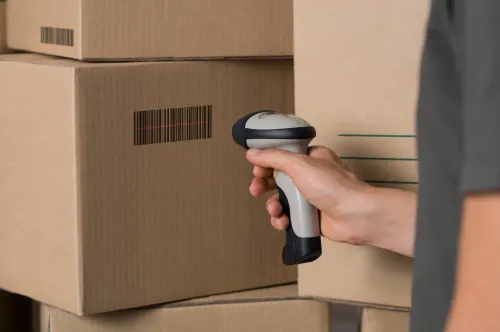
1. Extract the accounting ledger, fixed-asset register and relevant purchase data. Create one unique, non-recycled asset ID for each asset. Treat a barcode, QR code or RFID identifier as a capture method, not the permanent identity; reusing a tag after disposal can corrupt the audit trail.
2. Make these fields mandatory: asset ID, description, serial number, make and model, custodian, department, hierarchical location, acquisition date, supplier, invoice number, quantity, gross cost, useful life, residual value, depreciation method, accumulated depreciation, net book value, status, condition, review date and disposal date where applicable.
This gives business asset management in Tardeo a controlled baseline rather than a tag list.
3. Perform a floor-to-book count first. Record every item found, including unrecorded additions, with its tag scan, serial number, photograph, room and custodian. Then perform a book-to-floor reconciliation by locating every register line; do not mark an item as verified because its tag appears in a scan.
4. Give every exception an owner, due date, proposed treatment and evidence requirement. Obtain custodian confirmation, tag scans, serial-number records and photographs. Add management approval, invoices, transfer forms, disposal approvals, and scrapping or sale evidence to the adjustment file.
5. Finance must approve additions, deletions, transfers and capitalization decisions before locking the corrected opening balance. Preserve the pre-correction register, count file, adjustment journal and signed management sign-off; later changes must create a traceable revision instead of silently overwriting the baseline.
Apply one reconciliation rule to each type of mismatch
Each exception needs an owner, due date, disposition and supporting evidence. Use one rule for each mismatch in fixed asset management in Tardeo:
1. Found in use but absent from the register: verify ownership, invoice, capitalization treatment and condition before creating a record. Do not capitalize every invoice line automatically.
2. Recorded but not found: search the custodian, storage room, repair vendor and disposal records. Classify the asset as located, off-site, lost, stolen or unsupported before proposing a write-off.
3. Moved without a transfer record: retain the original asset ID and accounting history, update the custodian and location, and obtain retrospective transfer approval. Never treat relocation as disposal.
4. Duplicate tags: quarantine the duplicate ID, retain the valid controlled ID, replace the label and document the correction.
5. Component recorded as a separate asset: assess whether it is separately identifiable, has a different useful life or requires component accounting under Ind AS 16. Combine or componentise it through an approved accounting memo.
6. Fully depreciated but still in service: keep it as an active operational asset. At each financial year-end, review useful life, depreciation method and residual value, then record the approval and review date as required by Ind AS 16.
For business asset management Tardeo, reconcile approved adjustments to the general ledger, procurement system, insurance schedule, maintenance records and IT service desk before closing the exception list. Retain photographs, scan evidence and approvals with every adjustment.
Design a count that works across Tardeo offices and shared premises
A workable count begins with a room-by-room access plan, not a ledger export. Map reception areas, every floor, storage rooms, server rooms, locked cabins, shared premises, employee-held equipment and repair-vendor stock before scheduling operators.
- Assign a finance lead, one representative for each location, an IT or facilities representative and a reconciler.
- Record unavailable rooms and off-site assets as excluded, not counted.
- Estimate hours from the asset population, room restrictions, travel between floors and custodian availability.
- Test one representative room first, then commit to the full site only after the pilot exposes access or scanning problems.
Asset management services tardeo projects should compare these methods:
| Method | Best fit | Limitation |
|---|---|---|
| Barcode or QR | Moderate population, visible labels, low reader cost and direct scan evidence | Requires operator access and line of sight |
| UHF RFID | Larger populations or faster sweeps where read distance reduces line-of-sight work | Performance varies by site and tag placement |
Specify the supported frequency region and ISO/IEC 18000-63 protocol. Test RFID on site: metal cabinets, machinery, liquids, tag orientation, antenna placement, reader power and reader interference can create missed or stray reads. Use on-metal tags only after validation.
For every scan, capture register ID, tag ID, observed description, room, custodian, condition and photograph. Record tag material, placement, damaged-tag replacement and duplicate-ID controls. Treat an RFID hit as exception detection, not proof of ownership, value, condition or ledger matching.
Choose the control model that keeps exceptions closed
The sustainable choice is the model that assigns ownership for every change, not merely the system that records a scan. For business asset management in Tardeo, compare the operating burden before choosing:
| Option | What it means | When it applies |
|---|---|---|
| Controlled spreadsheet | Fast to launch, but weak for concurrent edits, audit trails and recurring counts | Small, stable office with few custodians and disciplined approval |
| ERP fixed-asset module | Connects procurement, capitalization, depreciation and the general ledger | Finance already controls those processes |
| Dedicated asset software | Supports mobile scans, hierarchical locations, custody workflows, RFID, photographs and exception dashboards | Multiple sites, frequent movements or detailed verification evidence |
| Outsourced managed service | Provides counting capacity and independent evidence under a defined scope | Dispersed sites or insufficient internal staff |
A spreadsheet fails when two people overwrite transfers or nobody preserves the old value. An ERP implementation takes longer, but accounting integration reduces duplicate data entry. For a managed engagement, define the asset population, access plan, scan method, reconciliation rules, turnaround time and sign-off owners before work begins.
Evaluate Welcome to V SOURCING by checking whether its asset management services in Tardeo connect physical verification, tagging, reconciliation and reporting, rather than delivering a scan-only count. Track unresolved exceptions, location accuracy, duplicate purchases, audit-sample retrieval time, year-end close duration and adjustment age.
Set the control calendar as follows:
- Count high-value mobile assets quarterly.
- Count sensitive rooms semi-annually.
- Count stable, low-risk areas annually.
- Review results monthly until exception ageing and location accuracy stabilize.
Related products
FIXED ASSET MANAGEMENT refers to the systematic process of acquiring, tracking, maintaining, and disposing of a company's fixed assets. View product → |
FIXED ASSET REGISTER CREATION A fixed asset register is a detailed list of all fixed assets which are owned by a business. View product → |
Frequently asked questions
Which records should you compare when checking fixed assets in Tardeo?
Compare the fixed asset register with the general ledger, procurement records, insurance schedule, maintenance records and IT service-desk inventory. Prioritise missing, duplicated, unauthorised, idle, wrongly assigned or wrongly located assets.
How do you repair a fixed asset register without losing control of the changes?
Create a controlled opening balance, record every adjustment with its reason and supporting evidence, and retain an approval trail for transfers, disposals, impairments and reinstatements.
How should businesses resolve fixed asset mismatches?
Apply one documented rule to each mismatch: investigate missing assets, merge duplicates, approve transfers, update locations, remove disposed items and stop depreciation after a confirmed loss or disposal.
How can you count assets across Tardeo offices and shared premises?
Divide each premises into zones, assign a count owner, record asset tag and location, and use a separate exception log for items found in shared rooms, storage areas or another team’s workspace.
Related products
FIXED ASSET PHYSICAL VERFICATION TAGGING & BARCODING SERVICES FIXED ASSET PHYSICAL VERFICATION TAGGING & BARCODING SERVICES Fixed Asset Physical Verification and Tagging entails the following activities : Comprehensive and complete physical verification exercise of all the... View product → |
ASSET RECYCLE MANAGEMENT refers to the process of efficiently and responsibly handling the disposal, reuse, or recycling of assets within an organization. View product → |
BARCODE/RFID Barcodes and Radio-Frequency Identification (RFID) are both technologies used for tracking and managing information about objects. View product → |
AUDITING AUDITING At V Sourcing we undertake specialized Audits like:- 1- Liquor Audit. 2- Liquor Excise Data Updation. 3- Stock Audit 4- Internal Audits. |
Keywords